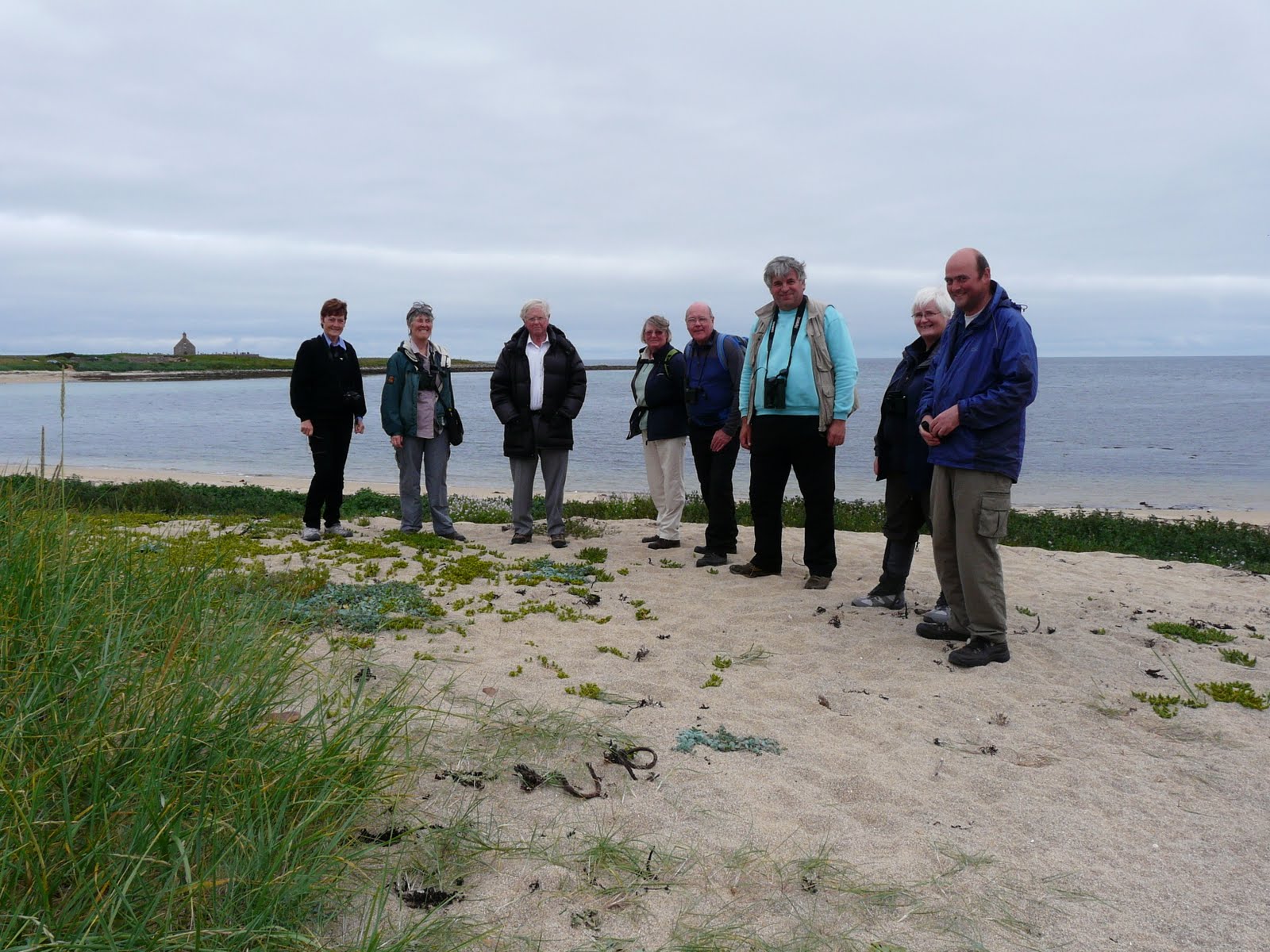
Los Afficionados admiring Oysterplant at the Pool o'Cletts, Eastside, South Ronaldsay
No4 barrier, Burray
Immature dunes (or Yellow dunes) are the sandy areas closest to the shore. The plants that grow there are integral to the formation of the dunes – their roots and leaves trap and hold the sand and are the first stage in the process of stabilisation. At the Fourth barrier, where the dunes are sixty years old, there is little maturity. The barrier is still very dynamic and ‘yellow’ and consequently is covered with early stage plants such as Lyme-grass, Marram Grass, Sea Sandwort and Orache. We also saw Perennial Sowthistle, Prickly Sowthistle, Common Catsear and Curled Dock, typical of this habitat and help in the formation of the mature or Grey dune.


Seeding Sea Sandwort
Immature dunes and beach
Orache, Sea Rocket, Lyme-grass, Marram Grass, Oysterplant, Sea Sandwort, Curled Dock.
Sea Rocket, in white and lilac, tended to lie lower on the beach than the Oysterplant. Both species still showed well but the Oysterplant, which in Britain only occurs in Scotland South Ronaldsay and Sanday pre-eminent.

Leaves the size of small cabbages on this Oysterplant
Mature dunes (or Grey dunes) are stable dunes which are characterised by species such as Ladies Bedstraw and Yarrow. Our walk along the upper path took us across carpets of bedstraw and passed clumps of Yarrow in many assorted pastel colours – white, pinks, magentas and lilacs.

Bird’s-foot Trefoil was still in flower but at this time in the year, the leaves begin to dominate. Angelica was beginning to unfurl while the Hogweed was starting to seed. Spear Thistles and Creeping Thistles grew abundantly in the overgrazed dunes inside the fence. At the southern end of the dunes were massed clumps of Lesser Meadow-rue none of which was in flower although we saw its seed-pods. However our exertions across the sands were not in vain – on a small sandy headland, Orkney’s only patch of Sea Bindweed was in full flower and we were a very appreciative audience. This little patch is out on a limb – the next nearest inScotland


Yarrow's stunning colours
Bird’s-foot Trefoil was still in flower but at this time in the year, the leaves begin to dominate. Angelica was beginning to unfurl while the Hogweed was starting to seed. Spear Thistles and Creeping Thistles grew abundantly in the overgrazed dunes inside the fence. At the southern end of the dunes were massed clumps of Lesser Meadow-rue none of which was in flower although we saw its seed-pods. However our exertions across the sands were not in vain – on a small sandy headland, Orkney’s only patch of Sea Bindweed was in full flower and we were a very appreciative audience. This little patch is out on a limb – the next nearest in

Sea Bindweed


